When is
tooth extraction necessary?
Tooth extraction or removal is most often performed in cases where the tooth is so severely damaged by decay or trauma that it cannot be qualitatively restored. Likewise, tooth extraction may be necessary in cases of severe gum disease when the tooth has become loose, or for orthodontic reasons to create space for teeth straightening.
However, the most common reason patients visit a surgeon is problems with wisdom teeth.

All about wisdom teeth and their extraction
Wisdom teeth, or third molars, are the last teeth to appear in the oral cavity, usually between the ages of 17 and 25. Since they grow in later than the other teeth, there is often insufficient space for them in the jaw.
If you experience pain in the back of the jaw, extraction may be necessary. In some cases, they can cause serious pain or even change the bite. If problems arise with wisdom teeth, their removal is usually recommended.
Most common symptoms of wisdom tooth problems:
- Red and inflamed gums in the area of the back molars.
- Swelling, pain, or fever.
- A feeling of pressure at the gum line.
- Enlarged and painful lymph nodes under the jaw.
- Difficulty opening the mouth or swallowing.
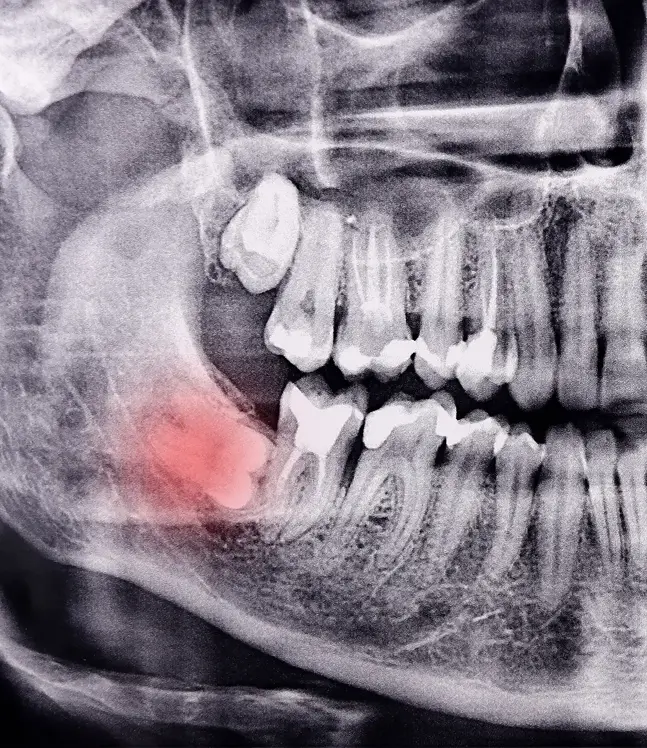
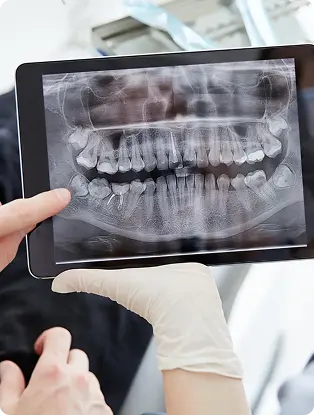
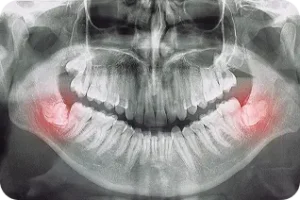
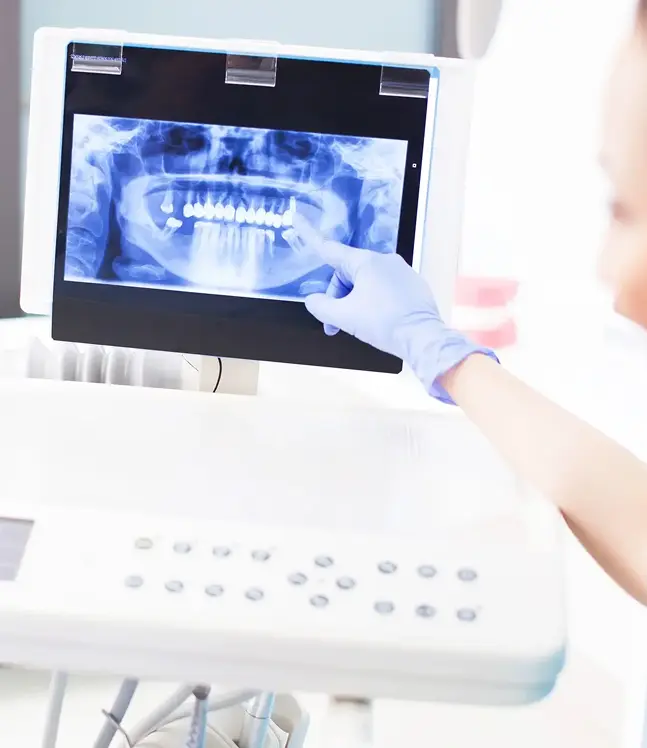
Often, a wisdom tooth grows at an angle or remains partially hidden under the gums, pressing on adjacent teeth and damaging their roots. In such situations, preserving the wisdom teeth is not practical. SmileArt clinic specialists will perform X-ray diagnostics to evaluate the condition of the wisdom teeth and decide if extraction is necessary.
It is a myth that wisdom teeth must be extracted for everyone. If they have grown in correctly, are healthy, and do not interfere with the bite, they can be preserved. However, wisdom teeth are difficult to reach with a toothbrush, making them more prone to decay. Whether it is a simple or surgical wisdom tooth removal, we ensure patient comfort.