Dental Bridges

Have a question? Contact us Book a consultation

In dentistry, dental bridges are one of the most popular and effective solutions for replacing missing teeth. A bridge is a fixed prosthesis that serves to restore tooth functionality and aesthetics by filling the gap left by a lost tooth. SmileArt clinic offers high-quality dental bridge fabrication using the most modern materials and technologies. The clinic’s specialists will help you choose the most suitable solution for your specific situation, taking into account individual needs.

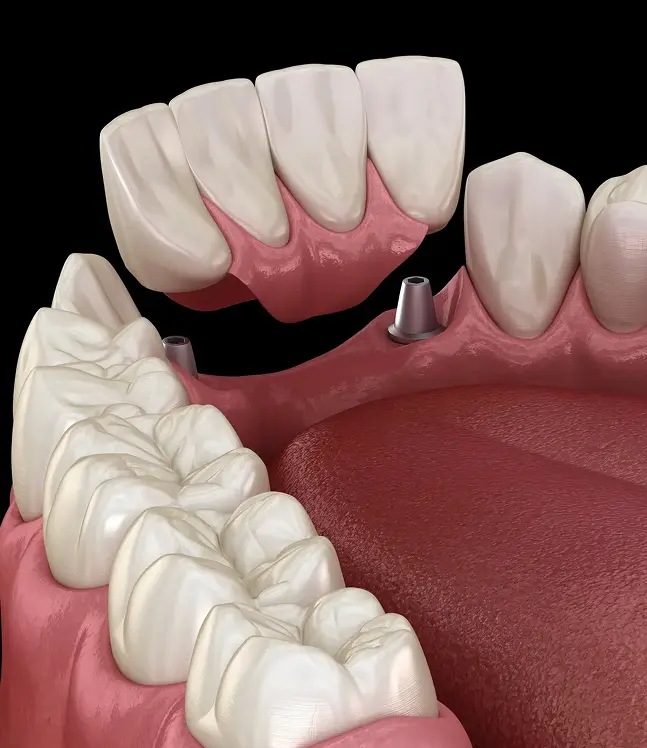
The anterior bridge is placed on implant abutments above the gums

What is a dental bridge?

A dental bridge is a dental structure consisting of one or more artificial teeth that are fixed to adjacent natural teeth or supported by several dental implants. The dental bridge structure relies on the preparation of adjacent teeth, which are reshaped to accommodate crowns that serve as bridge abutments. Between these crowns is an artificial tooth that replaces the missing tooth and provides the function of tooth replacement.

A bridge is an excellent choice for patients who are missing one or more teeth and whose adjacent natural teeth are sufficiently damaged, yet still strong enough to serve as secure abutments for the bridge. This method provides a stable and long-lasting result, restoring both chewing function and smile aesthetics. Dental bridges are particularly popular because they are resistant to chewing forces and look like natural teeth.
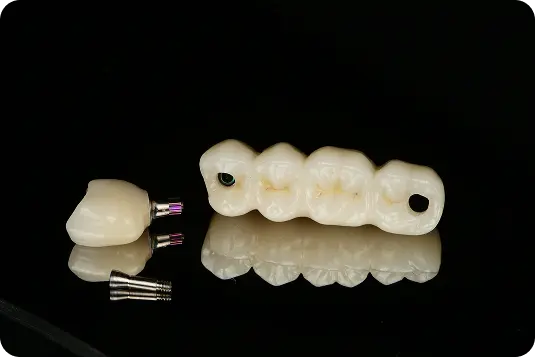
An implant-supported dental bridge and a single crown with screw-retained abutments on a black background

What are dental crowns and bridges?

Dental crowns and dental bridges are closely related dental structures. A dental crown is an artificial covering that completely encases a damaged or weakened tooth, restoring its shape and function. Dental crowns are also used as bridge abutment elements, between which an artificial tooth is fixed. A dental crown can be made from various materials, including ceramic, metal-ceramic, or zirconia.

A crown can be compared to a corset that holds the tooth together, and, similar to a cap, it is placed over the existing tooth structure, preserving it as much as possible.

Dental bridges, in turn, are structures that combine several crowns into a single unit, forming a bridge in place of an artificial tooth. Zirconia dental bridges are particularly durable and aesthetically pleasing because zirconia is a very strong material with excellent optical properties. Zirconia is also one of the most modern and newest generation materials in dentistry, which is biologically compatible with our body, meaning that gums accept it very well. Compared to other materials, zirconia surfaces accumulate the fewest bacteria and do not cause allergies.

Dental bridges made this way provide a natural appearance and longevity, which can exceed 15 years of intensive use.
Which dental bridge is best?

The choice of the best dental bridge depends on several factors, including the patient’s dental condition, the number and location of missing teeth, and aesthetic requirements. Ceramic bridges are an excellent choice for front teeth, as they provide the best aesthetic results. Metal-ceramic bridges are more durable and suitable for back teeth, where chewing forces are greater.


Zirconia bridges combine the advantages of both materials and are both durable and aesthetically pleasing, making them a universal solution. During the consultation, the clinic’s specialists will evaluate your dental condition and recommend the most suitable type of bridge, taking into account your individual needs and wishes. Dental prostheses (crowns, bridges, or combined prostheses) can vary, and the correct choice is key to a long-lasting result.

What is better: a dental implant or a
dental bridge?

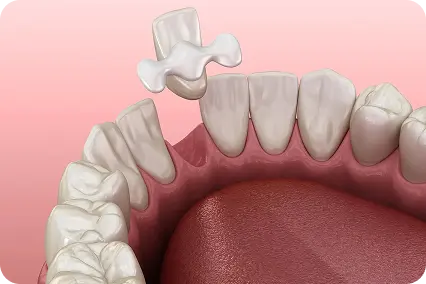
The Maryland adhesive dental bridge is positioned to replace an anterior tooth

The choice between implants and a dental bridge depends on the specific situation and the patient’s needs. An implant is an artificial tooth root that is placed in the jawbone and serves as a foundation for crowns. Dental implants provide an independent solution that does not affect adjacent teeth, whereas a bridge requires the preparation of abutment teeth and the reshaping of adjacent teeth.


The advantage of an implant is that it stimulates the bone and prevents its resorption (bone loss), which occurs after tooth loss in the long term. However, this method requires surgical intervention and a longer healing time compared to a dental bridge. A dental bridge is a faster solution that does not require surgery and is available sooner. If adjacent teeth are already damaged and the situation requires the patient to have dental crowns, a dental bridge can be a more economical and practical choice for many patients.

What is the difference between a dental bridge and dental implants?

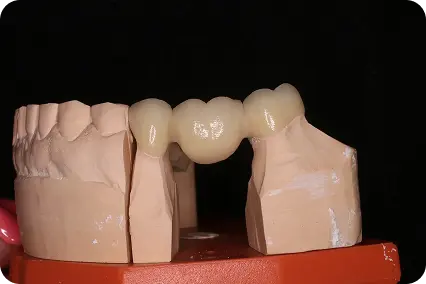
A dental bridge on a prepared plaster model, demonstrating precise alignment with the adjacent teeth

The main difference between a dental bridge and dental implants is the method of fixation and the impact on adjacent teeth. A bridge relies on adjacent natural teeth, while an implant is rooted directly into the jawbone as an independent structure. Tooth replacement with implants does not require reshaping healthy adjacent teeth, which is a significant advantage for patients with healthy adjacent teeth.


The choice of method depends on many factors, including bone condition, health status, and budget. Dental bridges are generally more economical in the short term, but implants can have a longer lifespan if properly cared for. SmileArt specialists will evaluate all factors and help you make the best decision for your dental health and long-term comfort.

How is a bridge made?

Bridge fabrication is a multi-stage process that begins with a thorough consultation and evaluation of the patient’s dental condition. During the first visit, the abutment teeth are prepared, after which they are reshaped to create space for the new restoration. Then, a dental impression is taken or a digital scan is performed, which is sent to the dental technician for fabrication of the structure in the laboratory.


While the permanent structure is being fabricated in the laboratory, a temporary bridge is placed for the patient to protect the prepared teeth and ensure aesthetics. During the second visit, the temporary structure is removed, and the permanent dental bridge is installed. The specialist checks the bite accuracy and makes any necessary adjustments to ensure a comfortable and functional long-term result.

Is dental bridge removal painful?

Bridge removal is generally not a painful procedure if performed professionally and with appropriate equipment. If the structure needs to be replaced or repaired, the dentist uses special instruments to carefully detach it from the abutment teeth. Local anesthesia is used during the procedure to ensure patient comfort and prevent any unpleasant sensations.


After removal, the abutment teeth are examined to determine if they are suitable for a new bridge or if another dental prosthetic method is needed. In some cases, transitioning to implants may be recommended, especially if the abutment teeth are severely damaged or weakened. The clinic’s specialists will provide a detailed consultation on future options and the optimal solution.

How should a dental bridge be cared for?

Bridge care is similar to caring for natural teeth but requires additional attention and diligence. Daily, teeth should be brushed at least twice a day with a soft toothbrush and fluoride toothpaste. It is especially important to clean the area under the structure, where food debris and bacteria can accumulate, regularly using special dental floss or interdental brushes.


Regular visits to the dental hygienist are essential to keep the structure and surrounding teeth healthy and functional. Professional cleaning helps prevent plaque buildup and ensures a long lifespan for dental bridges. With proper care, a high-quality dental bridge can last 10-15 years or even longer, providing the patient with a stable and aesthetic result.

A close-up of a woman's smile with straight, white teeth

Book a consultation

If you are considering a dental bridge as a solution for replacing missing teeth, we invite you to contact the SmileArt clinic for a consultation. Our experienced specialists will evaluate your dental condition, explain all available options, and help you choose the best solution. Regardless of whether you choose a dental bridge or an implant-supported restoration, we guarantee the highest quality and professional care.