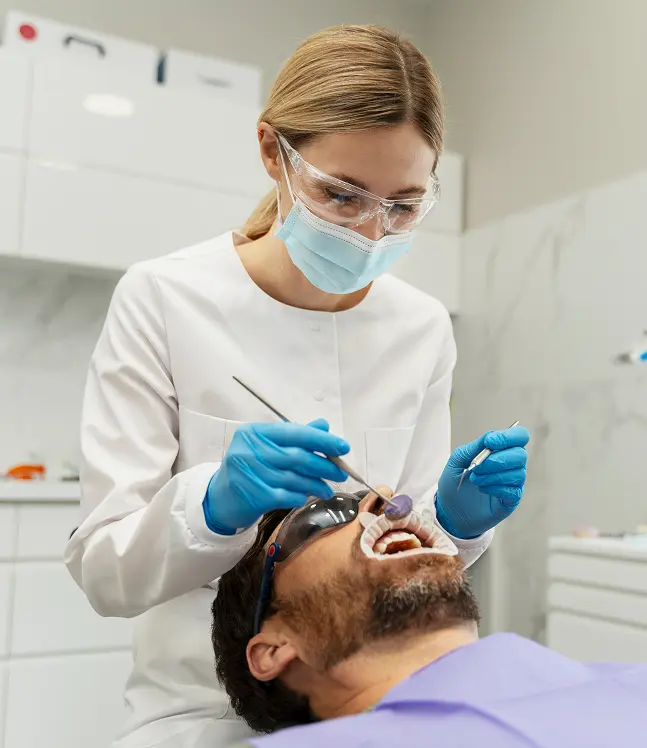
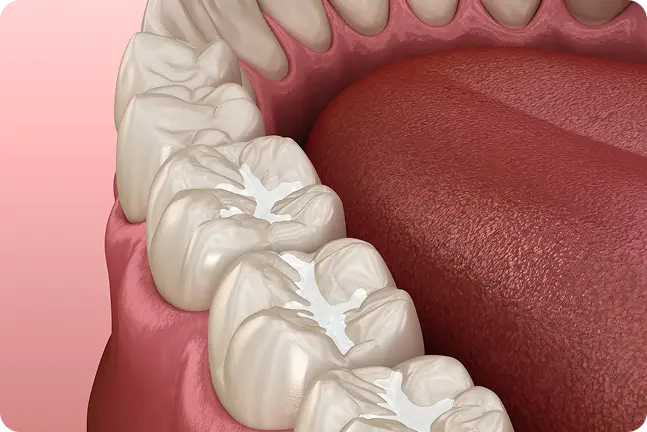
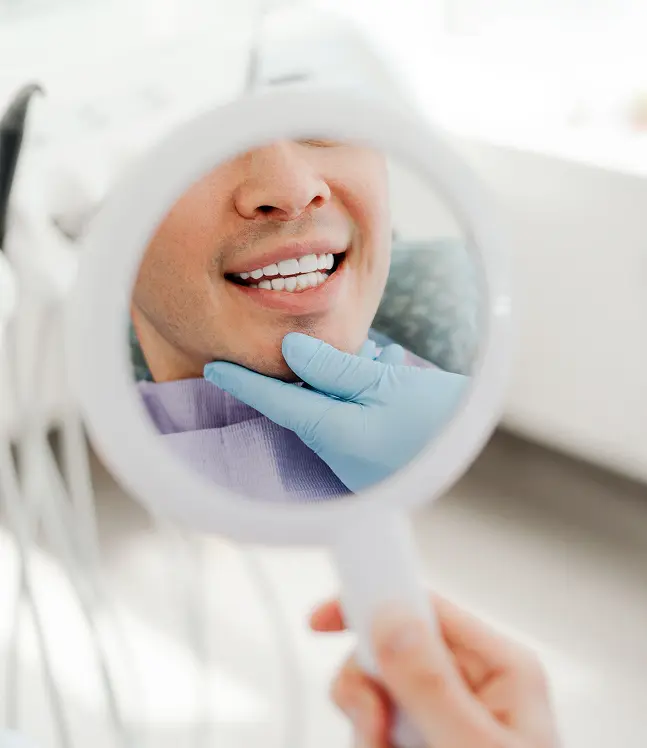
The dental restoration procedure usually takes place during a single visit lasting from 30 to 60 minutes, depending on the extent and complexity of the damage. If multiple teeth need to be restored, the procedure will require more time or several visits.
If a change in the shape of several teeth is planned, the first step is smile design and color selection. Initially, the new tooth shape is digitally modeled based on the client’s wishes, facial proportions, and natural color, while also considering the individual’s personality. Once the shape is clearly defined, the most appropriate color is also selected so that the restored teeth blend harmoniously into the overall smile aesthetics and look as natural as possible.
We particularly value client involvement in this process, as a jointly created design always ensures a result that best meets everyone’s wishes.
The second step is the restoration of the tooth itself. Once the digital model of the new shape is developed, it is used as a guideline, and the composite material is precisely modeled onto the tooth to achieve the intended shape.
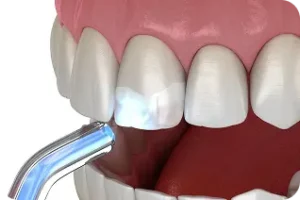
The procedure begins with careful preparation of the tooth surface, where it is cleaned of plaque and, if necessary, slightly roughened (micro-etched) to ensure optimal material adhesion.
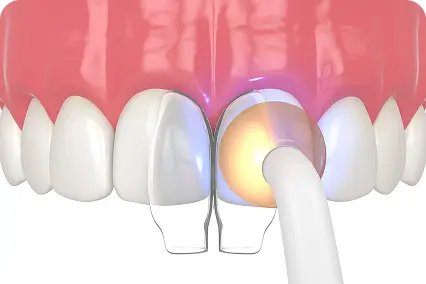
In the next step, the dentist applies a special adhesive system that acts as a bonding agent between the natural tooth and the composite material. This bonding agent is activated with a special blue ultraviolet light lamp, creating a strong chemical bond.
In the next step, the dentist applies a special adhesive system that acts as a bonding agent between the natural tooth and the composite material. This bonding agent is activated with a special blue ultraviolet light lamp, creating a strong chemical bond.
This is followed by the application of composite in layers. Each layer is carefully shaped and hardened with a curing lamp before the next one is applied. This gradual approach ensures the durability of the material and allows the dentist to precisely control the shape and color at every stage.
At the end of the procedure, the restored surface is carefully finished. Excess material is removed, the surface is polished, and the bite is adjusted. The result is a smooth, shiny surface that looks and feels similar to a natural tooth.