Dental veneers
or porcelain veneers

Have a question? Contact us Book a consultation

A beautiful and confident smile is one of the most powerful tools in human communication. It creates a first impression, builds trust, and reflects our personality. However, nature has not always endowed us with perfect teeth, and over time, various factors can affect the aesthetics of our smile. In these situations, dental veneers become an effective and sustainable solution that allows for a naturally beautiful smile.

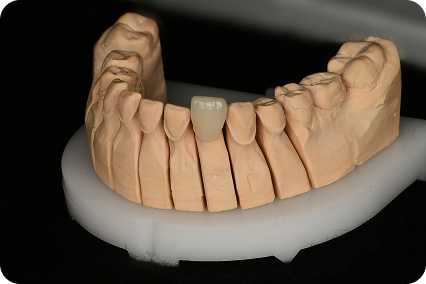
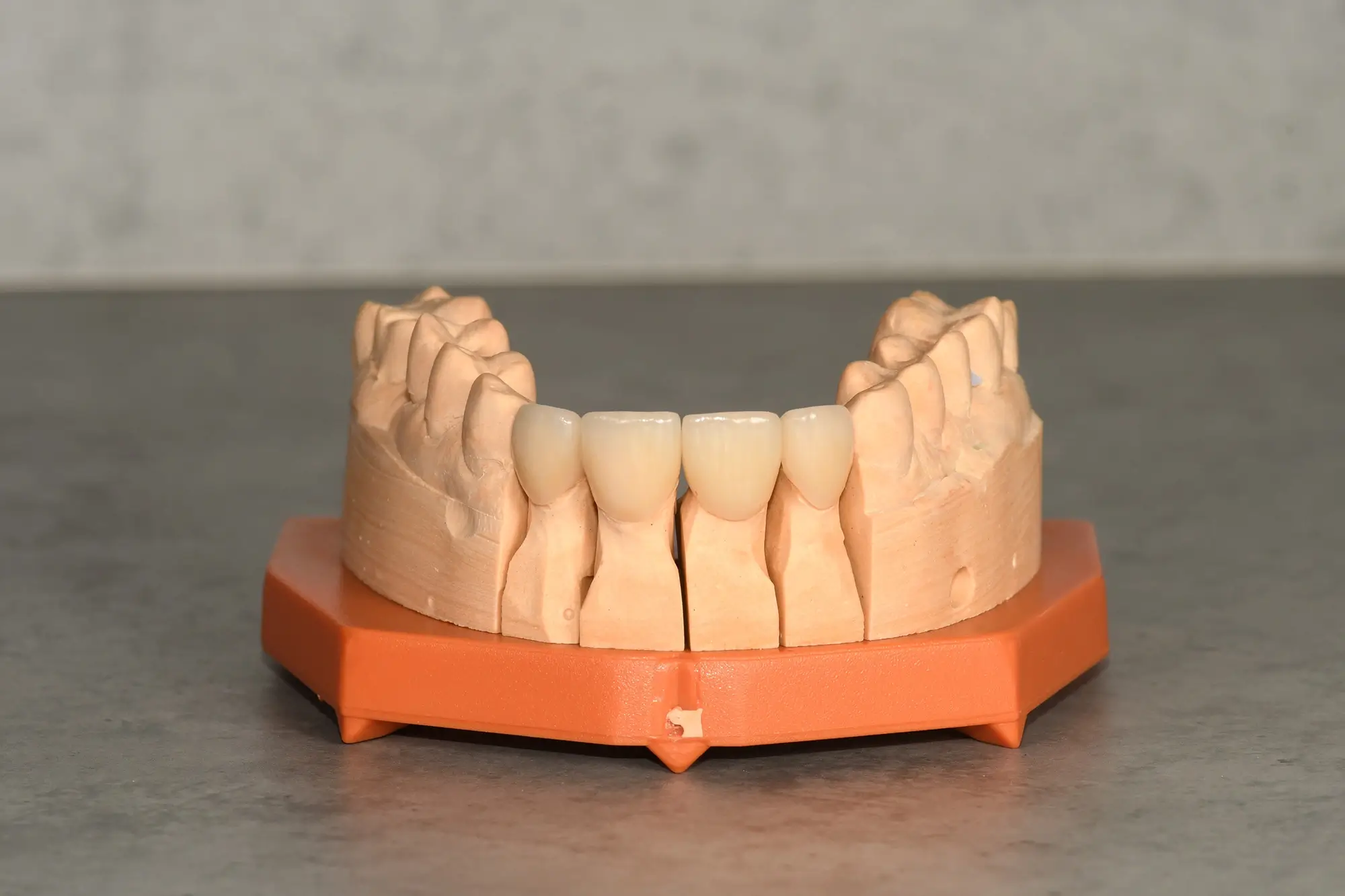
A dental model with porcelain veneers applied to the front teeth, demonstrating the shape and fit of the veneers

What are dental veneers?

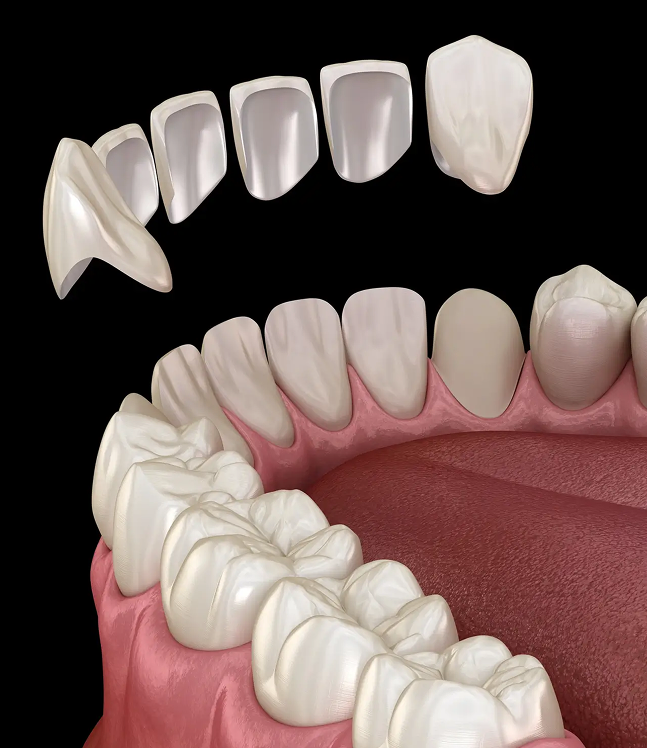
Dental veneers are thin ceramic or porcelain shells that are individually custom-made for each patient and attached to the front surface of the teeth. These porcelain shells are extremely thin, usually between 0.3 and 0.7 millimeters thick, yet they are durable and aesthetically pleasing. Veneers completely cover the visible part of the tooth, masking discoloration, irregularities, gaps, or other aesthetic defects.

Porcelain veneers are considered the highest quality solution in aesthetic dentistry because porcelain precisely mimics the optical properties of natural tooth enamel. Light shines through porcelain similarly to natural teeth, creating a completely natural appearance that is difficult to distinguish from real teeth.

When are veneers the right solution?

A sample of a porcelain dental veneer on a dental model prior to placement and smile correction

Dental veneers are a versatile aesthetic solution that helps resolve many issues. Most often, patients choose veneers if they face significant tooth discoloration that cannot be corrected with professional teeth whitening. Such changes can occur as a result of tooth mineralization disorders, excessive fluoride exposure (for example, if fluoride is consumed in excessive amounts through drinking water, toothpaste, or supplements), as well as after root canal treatment.


Veneers also effectively correct minor imperfections in tooth shape. They can hide chips, worn tooth corners, or uneven tooth edges. Veneers can also be used to correct tooth fractures. If teeth are slightly crooked or overlapping, but orthodontic treatment is not necessary or desired, veneers offer a quick aesthetic solution.


The gap between the two central front teeth, known as a diastema, as well as small gaps between teeth known as tremas, are another common reason why patients choose veneers. The shells are made slightly wider than the natural teeth, thus visually closing the unwanted gaps and creating a harmonious smile line.

The veneer application process

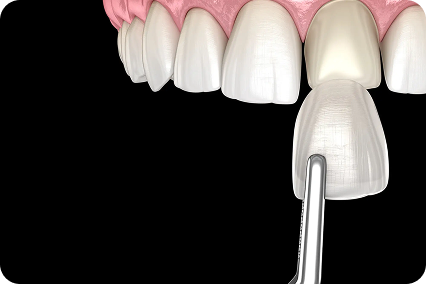
Placement of porcelain veneers on the front teeth for aesthetic smile correction

The journey to a new smile usually involves three to four visits to the dentist. During the first consultation, the doctor carefully evaluates the health of the patient’s teeth and gums, discusses the desired result, and creates an individual treatment plan. At this stage, it is essential to openly discuss your expectations and listen to the specialist’s recommendations for the optimal solution. Before starting treatment, all necessary information is collected, including dental and facial photography, dental scanning, and X-ray examinations, so that the new tooth shape can be digitally modeled on a computer.


The second visit usually begins with a try-in of the new smile, even before any tooth preparation. The appearance of the new smile can be viewed on a computer, and with the help of a special plastic material, it can be tried directly in the mouth over your own teeth to get an idea of the approximate feel and visual look. Only after the patient has confirmed that they like the planned result is the preparation of the teeth for veneer fabrication initiated. The doctor removes a thin layer of enamel from the front surface of the teeth, usually between 0.3 and 0.5 millimeters. This step is necessary so that the veneer fits harmoniously into the overall row of teeth and does not create a feeling of protrusion. If the supporting tooth is small and its volume needs to be increased, veneers can even be made without any tooth preparation in such cases. After the teeth are prepared, a precise impression is taken with silicone or a repeat dental scan is performed, which serves as the basis for fabricating the veneers in a dental laboratory.


While the permanent porcelain veneers are being fabricated, which can take one to two weeks, temporary veneers are placed for the patient. These protect the prepared tooth surfaces and allow for an assessment of the upcoming aesthetic result.


The final visit is dedicated to the installation of the permanent porcelain veneers. The doctor first places the veneers without bonding to check for color match, shape, and mutual compatibility. After any necessary adjustments, the teeth are carefully prepared for adhesive bonding; in other words, the tooth surface is etched with a special gel that ensures maximum adhesion to the veneer. The veneers are attached using a special light-cured cement material, which provides a strong and long-lasting bond.

Advantages

Advantages of
porcelain veneers

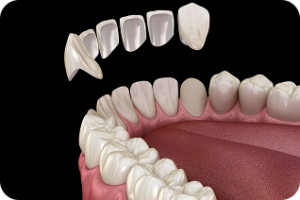
Porcelain dental veneers in various sizes and the process of applying veneers to the front teeth

Care and Longevity

To ensure veneers last as long as possible, regular and proper care is required. Daily oral hygiene with veneers does not significantly differ from regular dental care. It only requires thorough tooth brushing at least twice a day and the use of dental floss. It is recommended to choose a softer toothbrush and a toothpaste without abrasive particles.

Regular visits to the dentist should be scheduled at least twice a year, as this helps to detect potential problems early and ensure professional teeth cleaning. A hygienist can use special instruments that safely clean the surfaces of the veneers.

Although porcelain veneers are durable, they are not unbreakable. It is recommended to avoid chewing on excessively hard products (ice, hard candy, or nut shells), which can damage veneers just like natural teeth. Patients who grind their teeth at night, a condition known as bruxism, may benefit from using a night guard to protect both the veneers and the opposing teeth from excessive wear.

An investment in your smile

Dental veneers are an investment that pays off with improved self-confidence and quality of life. People who previously avoided smiling in photos or felt uncomfortable in social situations often experience significant psychological relief after getting veneers.

Although the initial investment in porcelain veneers may seem significant, in the long run, it often proves to be economically justified. High-quality veneers last for decades, and their maintenance does not require significant additional costs.

If you are considering improving the aesthetics of your smile, we invite you to apply for a consultation at our clinic. Experienced specialists will evaluate your individual situation, discuss all possible options, and help you make an informed decision about the future of your smile.